Featured
Table of Contents
Depth treatment is a healing method based upon the job of Swiss psychiatrist Carl G. Jung. Depth treatment is founded on the idea that a lot of psychological wellness concerns are brought on by unconscious motivations and that disclosing and checking out these inspirations is the essential to recovery. Although there are lots of different methods that fall under the umbrella of depth therapy, one unifying goal of specialists that concentrate on depth treatment is to integrate the subconscious mind with the mindful.
Psychology is constructed around the study of the human mind, which numerous famous psychologists have believed to be affected by the subconscious. Depth psychology is a branch of psychology that looks into the unconscious elements of the human psyche to understand the underlying inspirations and emotions that drive habits. The subconscious mind is an essential component of deepness psychology.
Deepness psycho therapists typically see the human subconscious as both conscious and unconscious, and psychoanalysis is generally their primary psychotherapeutic strategy. Deepness psychology discovers the underlying objectives that might be the key to psychological distress. There is a belief that revealing unconscious forces can be inherently recovery. This psychoanalysis often looks for the deeper layers under our conscious awareness, behavior, and thoughts.
Repairing Interpersonal Trauma
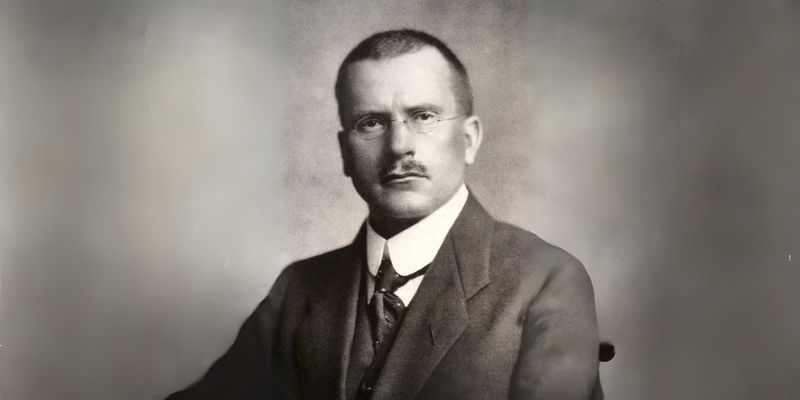
As part of his work, Jung relied on a deeper cumulative subconscious and representative archetypes. The collective subconscious, according to Jung's deepness emotional perspective, aids describe our disposition toward myth-making and dreaming. Underlying this combination is the idea that the human subconscious is partly conscious and partially subconscious, storing experiences and problems that might have been repressed, in addition to collective and archetypal forces.
Your psychotherapist can provide assistance as you make adjustments in exactly how you respond and can aid you with considerably challenging scenarios. Deepness pyschotherapy is fit to individuals who wish to deal with deep-rooted mental and emotional obstacles, in addition to trauma. Likewise, there may be actions that you continue to duplicate even though they are harming to you.
Steps of Ego-state therapy
You may need to be encouraged and client throughout the procedure, yet it could aid you discover extra regarding yourself through an expedition of your unconscious thoughts. This process might assist with any life tests you are dealing with and aid you progress with higher insight. Take the initial step towards discovering more regarding deepness psychology and reach out to BetterHelp today.
Bleuler was the supervisor of the Burghlzli Asylum in Zrich, where Carl Jung started his job. Analysts like Sigmund Freud, Alfred Adler, and Otto Rank added to the growth of this area. This field is most closely connected with Jung's job. The techniques of this initial wave of psychology look for to go past behavioral and cognitive processes to the subconscious encouraging elements underneath them (thus the term "deepness").
By bringing the subconscious product of the individual to consciousnessboth individual and collectiveone relocations from fragmentation and "one-sidedness" towards integrity. Jung thought that we were all browsing for the exact same point: the heart. From his sight (and direct experience), one requires to accept one's inner worldexploring one's desires and imaginationto ultimately come to a stage of integrity where one's spirit is realized.
Why EMDR Addresses Developmental Trauma
Together, they stand for opposing forcesyin and yang. Because of this, the experts of deepness psychology had to create a new language for studying and interpreting icons and brand-new techniques for communicating through pictures. Integrating the opposites can be tough, as it calls for an alchemical process that ultimately leads to psychological combination.

To be familiar with one's shadowthe parts of oneself that a person is cut off and divorced fromrequires repeatedly confronting the vanity's identity. Depending on one's degree of inner resistance and will, this procedure can be testing for numerous people. For this reason, specialists like Jung (and scholars like Joseph Campbell) consider it a "brave act" to link the gap in between the mindful and the subconscious.
Actually, Freud was grooming the more youthful Jung to be his successor. The 2 males really did not see eye to eye. (In the end, their specialist partnership ended instead suddenly.) Before their separation, Sigmund Freud called his area psychoanalysis, as in the research of psychotic and mentally sick people. Jung suggested a various name for their emerging field: psyche-analysis.
Jung saw their function as an evaluation of the human mind, heart, and spirit. That is, Jung saw an extremely various image of the human condition than Freud. Freud regarded his people to be ill while he, as an analyst, was not. Psychoanalysis, sadly, set the tone for the next century of psychology, which generally concentrated on mental ailment.
Understanding If Unprocessed Trauma Requires Professional Help
Jung thought that we are ALL fragmented and divided, and purposefully or not, we're all looking for our hearts. This look for one's soul goes to the center of depth psychology. Sigmund Freud (facility) and Carl Jung (right) in 1909Credit: Wellcome Collection, London. Wellcome Images The understandings originated from analytic theory are, generally, located outside academic community.
D. in psychology, you aren't most likely to communicate with Jungian concept other than probably in a history class (where they instruct you that psychoanalysis was the "initial wave"). The scholastic field of psychology is, as Jung would say, discriminatory. It's nearly specifically concentrated on the conscious mind (what he called the thinking function).
It makes sensemost individuals operate completely within the mindful mind, the world of the vanity. Right here, the ego is in charge and attempts to manage itself and its setting. Deepness psychology, in contrast, requires us to communicate with the subconscious domainto go into the frequently ambiguous world of icons, photos, and sensations.

Latest Posts
Therapeutic Stance in Depth Psychology for Child therapy
Locating the Right Dynamic Therapist for Your Concerns
Cognitive Therapy for OCD